
How Roadside Assistance Works: A Practical Guide for Drivers
When a vehicle stops working unexpectedly, knowing how roadside assistance works can make a stressful situation more manageable. Roadside assistance is a breakdown support service that connects you with a trained service provider when your car cannot continue safely or needs practical help at the roadside. Depending on your plan and the provider, that help may include a battery jump start, tire change, fuel delivery, vehicle lockout assistance or towing.
The process is usually straightforward: make the vehicle and its occupants safe, contact the provider, explain where you are and what happened, then wait for a dispatched technician or tow truck. The technician assesses the problem and either completes a suitable roadside repair or arranges transport to a repair facility. Understanding what happens at each stage helps you give useful information, avoid unsafe decisions and set realistic expectations about cost and arrival time.
For local motorists, our roadside assistance services can be a practical option when a breakdown, flat tire or lockout interrupts a journey. The right response still begins with safety, not with attempting a repair in a dangerous location.
What roadside assistance actually means
Roadside assistance is help delivered when a vehicle becomes disabled or a driver needs a limited emergency service away from home. It is not the same as a full mechanical repair workshop. A technician may be able to restore enough function for you to continue, but a serious engine, transmission, electrical or collision-related problem will often require towing.
Coverage varies. Some drivers receive roadside assistance through an automobile club such as AAA, an insurance policy, a vehicle manufacturer, a finance agreement or a standalone provider. Others request pay-per-service help when an incident occurs. Before an emergency, check whether your plan covers the vehicle or the person, how many service calls are included, distance limits for towing, after-hours charges and restrictions for certain roads or situations.
In simple terms, the roadside assistance process has three purposes:
- Protect people: move the situation away from immediate traffic danger where possible.
- Assess the vehicle: identify whether the issue can be handled safely at the roadside.
- Restore mobility or recover the vehicle: provide a limited service or tow it to an appropriate destination.
Roadside help does not remove the need for vehicle maintenance. Regular checks reduce avoidable failures, but even a well-maintained car can suffer a puncture, discharged battery, lost key or unexpected mechanical fault.
How the roadside assistance process works step by step
Step 1: Make sure you are safe first
If the car is still moving, steer it to a safe location such as a hard shoulder, parking area or well-lit side road, but do not take risks to reach one. Turn on the hazard lights, apply the parking brake and switch off the engine if appropriate. On a busy road, remain inside the vehicle with doors locked if leaving it would expose you to traffic. If you must exit, use the side away from moving vehicles and move well clear of the carriageway.
Never stand behind or directly beside a disabled vehicle on a fast road. A warning triangle or other safety equipment may be useful only when it can be placed without putting you in danger. If there is a collision, fire, injury or immediate threat, call emergency services first rather than relying solely on a roadside provider.
Step 2: Contact the provider or request service
Use the membership app, telephone number on your card, insurer’s claims line or the contact details for the provider you have chosen. If you are using a local service, contact our team with the essential details ready.
Tell the dispatcher your exact location, direction of travel, nearest junction or landmark, vehicle make and model, registration number and the nature of the problem. Explain whether the car is blocking traffic, whether anyone is vulnerable or injured, and whether the vehicle is in a garage, soft ground or another difficult position. Accurate information supports the dispatch process and helps the provider send suitable equipment.
Step 3: Dispatch, ETA and arrival
The dispatcher records the incident, checks service availability and assigns a provider or technician. You should receive an estimated arrival time, although an ETA is not a guarantee. Keep your phone available in case the technician needs to confirm your location. If you move, update the dispatcher rather than assuming the original destination will be obvious.
The service provider may use GPS coordinates, a landmark or a description of the road environment to find you. On arrival, check that the technician and vehicle correspond with the details you were given. Be cautious about accepting unsolicited help from unknown individuals, particularly at night or in isolated places.
Step 4: On-site diagnosis and the service provided
The technician normally asks what happened, checks the vehicle and decides whether a safe roadside solution is possible. For example, a jump start may restore a battery that has been discharged, while a tire change may replace a roadworthy spare. A vehicle that has overheated, lost oil pressure or suffered major damage should not simply be restarted because doing so may worsen the fault.
If a roadside fix is unsuitable, the technician explains the towing option, destination and any additional charge before proceeding where possible. This is the practical answer to “what happens after you call for help?” You receive an assessment, a service within the provider’s capability and, when necessary, recovery to a repair location.
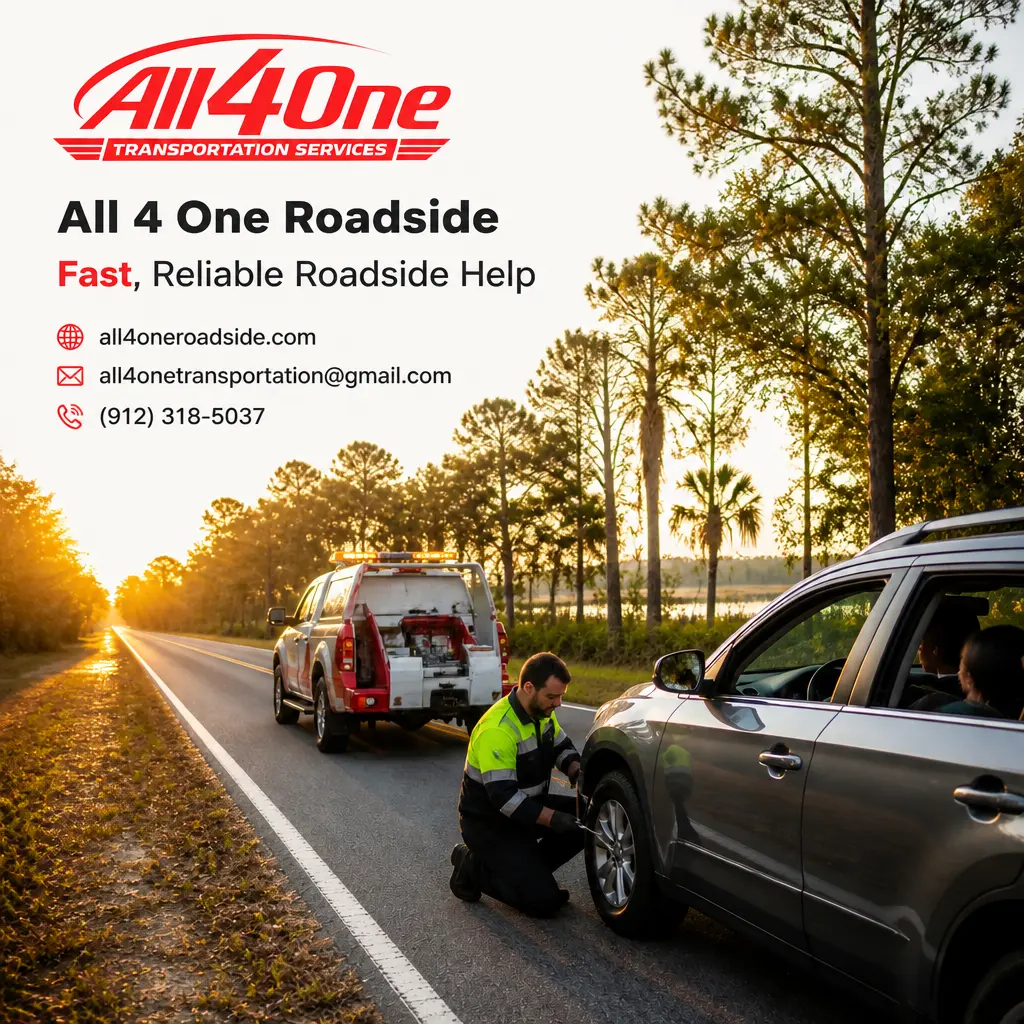
All 4 One Roadside: Our Reviews
Trustindex verifies that the original source of the review is Google. Timothy Donley was very knowledgeable and helped me with my insurance claim from start to finish. He guided me each step from installation to completion of my roof, siding, windows and gutters at my home in Maryland heights, MO. He’s a great guy and I would highly recommend him and AAA Roofing and Exteriors. You won’t be disappointedTrustindex verifies that the original source of the review is Google. Tim is a very nice gentleman and business oriented. He repair our roof and replaced our gutters all around our home, which they did a fantastic job. I would recommend AAA Roofing for any roofing job!!Trustindex verifies that the original source of the review is Google. I am a Realtor in Alton Illinois and just had a client he completed a flat roof on a commercial building in East Alton and has helped me with several other clients. Nothing but good feedback from my clients. Thank you and look forward to working with you in the future.Trustindex verifies that the original source of the review is Google. I met Tim a couple months ago when he was going through some rough times. He has since pulled things together and overcome some hard obstacles and the difference is night and day. He was instrumental in getting my roof insurance claim approved through state farm on my home in Belleville Illinois, in fact I doubt I would have obtained the approval without him. Then, after getting into the job he found the majority of my 20 x 20 back deck roof was rotted so he completely tore off the exiting roof, down to the support beams, and totally rebuilt it. I'm amazed at the workmanship and quality of work. The work crew was very professional and did a thorough clean up afterward. Everything went smooth and I couldn't be happier with the finished job. I'll definitely recommend Tim to my friends for exterior work to their homes.Trustindex verifies that the original source of the review is Google. Tim Donley and his crew did a fantastic job for us. My job just took one day and we ended up getting money back from our insurer. The job was performed at my law office in St Clair County.Trustindex verifies that the original source of the review is Google. Easy to talk with and did what was requested on my roof in Belleville. Would call again if needed. Tim worked well with my insurance company. Because of that he got things moving quickly
Common roadside assistance services and when they are used
Jump starts and battery issues
Jump start assistance is commonly requested when lights, accessories or an ageing battery have left the vehicle unable to start. A technician uses appropriate equipment and follows a safe connection procedure. You should not attempt to jump a battery that is cracked, leaking, visibly swollen or frozen. Modern vehicles may also have specific jump points or battery-management requirements, so the owner’s manual matters.
A jump start may get you moving, but it does not prove that the battery or charging system is healthy. If the car stops again, the alternator, battery, starter or electrical system may need professional testing. Drivers who want to understand this service can review jump-start battery assistance before an incident occurs.
Flat tire help and tire changes
Flat tire help may involve fitting your inflated spare, inflating a tire sufficiently to move the vehicle or towing it when a safe replacement is not available. A technician cannot always repair a damaged tire at the roadside, and many cars now carry an inflation kit rather than a spare. The condition of your wheel, locking-wheel-nut key and spare tire affects how quickly the job can be completed.
Do not remain on the traffic side of a vehicle to change a tire on a narrow shoulder. If the location is unsafe, request roadside assistance and wait in a protected position. A tire-pressure warning may indicate a slow puncture rather than a complete failure, but it should not be ignored.
Car lockouts
Car lockout assistance helps when keys are locked inside the vehicle, lost or damaged. The technician may use non-destructive entry methods or help arrange a replacement key, depending on the vehicle and proof of ownership. Modern keyless systems can make a lockout more complex, particularly when the key is missing rather than simply trapped inside.
Have identification and vehicle documents available if requested. Do not force a window, use improvised tools or ask an unverified person to bypass the lock. These actions can damage airbags, seals, wiring or the locking mechanism. More information is available through car lockout assistance.
Fuel delivery and towing
Fuel delivery may provide enough fuel to reach a station when the tank has run dry. The amount and type of fuel supplied can depend on the provider’s policy. If the wrong fuel has been added, do not start the engine; explain the situation when you call because fuel drainage is different from ordinary fuel delivery.
Roadside assistance towing is used when a vehicle cannot be made safe or reliable at the scene. A tow truck may take the car to a repair shop, home or another permitted destination, subject to coverage and distance limits. Towing may also be needed after a collision, although insurance and emergency-service procedures may apply.
What affects response time, availability and cost?
Location, weather, traffic and time of day
Roadside assistance response time depends on how close an available technician is, the number of active calls and the road conditions. Heavy traffic, flooding, severe storms, roadworks and nighttime access can all delay arrival. A remote location may have fewer nearby providers than a major town, while a busy holiday period can increase demand.
Give the dispatcher a precise position and describe access restrictions. A pinned location is helpful, but also provide a nearby road name or landmark because GPS can be inaccurate on divided roads or rural routes. If the situation becomes more dangerous while you wait, call the provider again and, where necessary, emergency services.
Membership plans versus pay-per-service help
Membership plans typically charge a recurring fee in exchange for defined benefits, such as a set number of call-outs or towing distance. Pay-per-service help has no membership commitment, but the price is usually confirmed for the individual incident. Neither option is automatically best for every driver.
| Option | What to check | May suit |
|---|---|---|
| Membership | Annual price, vehicle or person coverage, service limits, towing miles and exclusions | Drivers who want predictable access throughout the year |
| Pay-per-service | Call-out fee, mileage, labour, after-hours pricing and payment method | Drivers who rarely need assistance or prefer no recurring commitment |
Compare the actual terms rather than assuming every plan includes the same roadside assistance services. Ask whether a second visit, difficult recovery or destination change creates an extra charge.
Vehicle condition and problem complexity
A straightforward lockout or accessible tire change may take less time than a vehicle stuck in mud, a car with severe damage or a fault requiring specialist equipment. The vehicle’s size, position, drive system and ground conditions can affect the equipment needed. Clearly describe the problem at the first call so the provider can plan appropriately.
How to prepare before you need roadside assistance
Keep important information accessible
Save your provider’s number in your phone, but keep a written copy in the vehicle in case the phone battery is low. Store insurance and membership details securely. Know your registration number, vehicle specification and any relevant roadside coverage limits. The owner’s manual can identify safe jump points, tire equipment and manufacturer-specific procedures.
If you travel with children, older passengers or anyone with medical needs, plan how you would keep them safe during a delay. A charged phone, car charger and power bank can make communication easier, but never handle a phone while driving.

Build a basic emergency kit
A sensible kit supports vehicle safety while you wait, but it is not a replacement for professional help. Consider carrying:
- A reflective vest and torch with spare batteries.
- Warning equipment such as a safety triangle, used only when it is safe to place it.
- Gloves, basic first-aid supplies and a phone charger.
- Water and suitable provisions for passengers and pets.
- A correctly inflated spare tire, jack and wheel key if your vehicle uses them.
For a broader checklist, consult NHTSA vehicle safety equipment guidance. Keep the kit secured so it does not become a hazard during sudden braking.
Maintain your vehicle regularly
Check tire pressure, tread, fluid levels, lights, wipers and battery condition according to the owner’s manual. Do not wait for a warning light before investigating a change in performance. The U.S. Department of Energy’s vehicle maintenance advice provides general prevention guidance, while AAA’s automotive maintenance resources can help drivers organise routine checks.
For manufacturer-specific maintenance schedules, recall information and owner guidance, use NHTSA information on vehicle manufacturers and your vehicle manufacturer’s official resources. Maintenance cannot prevent every breakdown, but it can identify worn tires, weak batteries and other developing problems before they become an emergency.
How roadside assistance works in the Hinesville area and nearby communities
Where local drivers often need help
Drivers in southeastern Georgia may need breakdown support on commuting routes, near shopping areas, outside workplaces or on quieter roads between communities. A precise location is especially important where roads are rural, shoulders are narrow or several routes share similar names. If you are looking for roadside assistance in Hinesville, provide the nearest cross street, business, mile marker or clearly visible landmark.
A problem can happen just as easily during a short journey as on a long trip. Someone travelling through Richmond Hill should still move to safety and report the direction of travel. The same approach applies when help is needed in Allenhurst, particularly where a technician may need extra directions to reach a specific roadside position.
Choosing a provider that understands the area
A local service provider may be familiar with access points, common routes and the practical challenges of reaching drivers outside dense urban areas. Before booking, confirm the service area, hours, payment arrangements and whether the provider handles your vehicle type. Drivers in Savannah may have different traffic conditions from those travelling near Glennville, but the core process remains the same: accurate information, safe waiting and a clear service decision.
If your vehicle is disabled near Eulonia or Rincon, mention the road direction and nearest recognisable point when requesting help. You can also learn more about All 4 One Roadside and the types of support available before you need them.
Frequently asked questions about roadside assistance
How fast does roadside assistance usually arrive?
There is no universal arrival time. The ETA depends on location, traffic, weather, call volume, technician availability and the complexity of the recovery. A clear address or GPS position helps reduce avoidable delays. Treat the quoted ETA as an estimate and stay reachable for updates.
Will roadside assistance fix my car on the spot?
Sometimes. A jump start, tire change, lockout solution or limited fuel delivery may restore mobility. A major mechanical fault, overheating, collision damage or unsafe roadside position is more likely to require towing. The technician should explain what can be done safely rather than promising a complete repair.
What should I do while waiting for help?
Turn on hazard lights, keep clear of traffic and follow the dispatcher’s instructions. If it is safer inside the vehicle, remain buckled up with doors locked. Do not stand near the road, attempt a repair in moving traffic or accept help from an unidentified person. If you feel drowsy during a long wait or journey, take the issue seriously and review NHTSA guidance on drowsy driving. Call emergency services if there is immediate danger, injury or fire.
Is roadside assistance worth it for everyday drivers?
For many regular drivers, the value is the combination of practical help, clearer decision-making and reduced stress when a car cannot continue. It may be particularly useful for people who commute, carry children, travel at night or drive in areas where repair facilities are not close by. Compare the annual membership cost with pay-per-service pricing, towing limits and the services you are most likely to need. The best choice depends on your driving habits, vehicle age, existing insurance and tolerance for unexpected expense.
Conclusion: understanding the process helps you stay calm
Understanding how roadside assistance works gives you a simple plan for an uncertain moment: get to a safe position, contact the provider, share accurate location and vehicle details, wait safely and let the technician assess the problem. Common services include jump start assistance, flat tire help, car lockout assistance, fuel delivery and towing, but coverage, cost and response time vary.
Preparation matters too. Keep contact information accessible, maintain your vehicle, carry sensible safety equipment and review your membership or pay-per-service terms before a breakdown occurs. Whether you drive around Hinesville, Savannah or nearby communities, calm communication and sensible vehicle safety decisions are the most reliable first steps.